
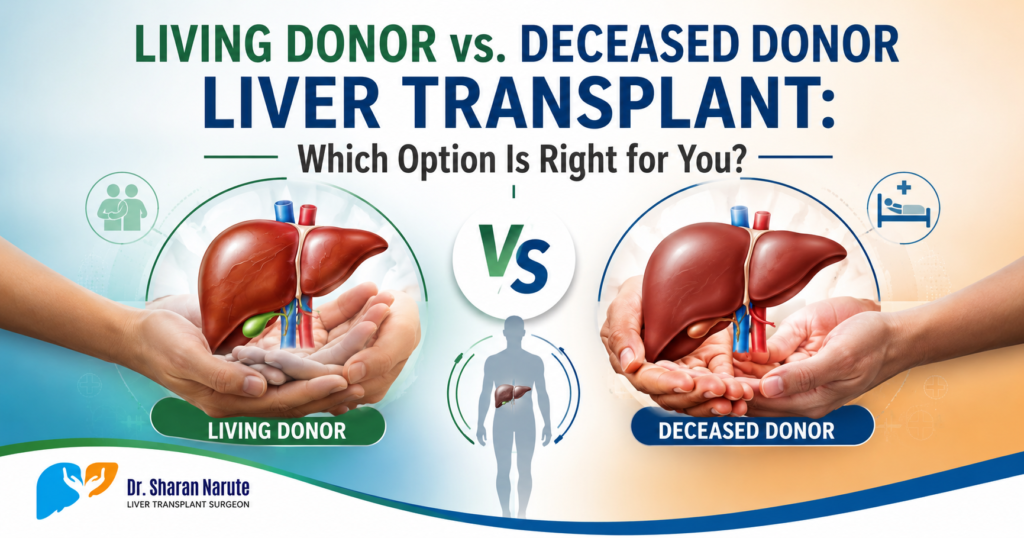
When liver disease progresses to liver failure, transplantation can offer a life-saving treatment option. But for many patients and families, one of the biggest questions is: Should we consider a living donor liver transplant, or wait for a deceased donor liver?
The answer is not the same for everyone. A Best Liver Transplant Surgeon can assess the patient’s medical condition, transplant urgency, donor availability, blood group compatibility, liver size, and other factors before recommending the most appropriate option. If you are researching Liver Transplant Surgeon In Nashik, Sangamner, understanding the differences between these two transplant pathways can help you have a more informed discussion with your transplant team.
In India, living donor liver transplantation is particularly important because the availability of deceased donor organs remains limited. Research published in Transplantation notes that living donor liver transplantation is the predominant form of liver transplantation in India.
What Is a Liver Transplant?
A liver transplant involves replacing a diseased or failing liver with a healthy liver or a suitable portion of a donor liver. It may be considered for people with advanced liver disease, liver failure, and certain liver cancers or other conditions when other treatments are no longer sufficient.
There are two main donor sources:
Living donor liver transplant (LDLT): A healthy person donates a portion of their liver to the recipient.
Deceased donor liver transplant (DDLT): A liver is donated after a person’s death and allocated to an eligible recipient through the organ donation system.
The liver has a unique ability to regenerate. In a living donor transplant, only part of the donor’s liver is removed, while the transplanted portion can grow in the recipient. The donor’s remaining liver also increases in size and restores liver capacity.
Living Donor Liver Transplant: How Does It Work?
In a living donor transplant, a medically suitable person undergoes an extensive evaluation before being approved as a donor. The donor may be a family member or another eligible person, depending on applicable laws and transplant regulations.
The donor evaluation is designed to protect the donor as well as the recipient. It can include medical history, blood tests, imaging studies, assessment of the liver, and other physical and psychological evaluations.
In India, the National Organ and Tissue Transplant Organization (NOTTO) states that an adult living donor can voluntarily donate part of the liver within the country’s legal framework. Donation by a person other than a near relative may require authorization under the applicable regulations.
Potential Advantages of Living Donor Transplant
A living donor can provide an important advantage: the transplant can generally be planned rather than waiting for an organ to become available.
The U.S. National Institute of Diabetes and Digestive and Kidney Diseases explains that patients receiving a living donor liver can have surgery scheduled in advance, whereas deceased donor transplantation depends on an appropriate organ becoming available.
Other potential advantages include:
- Reduced dependence on the deceased donor waiting process: A suitable living donor can provide another pathway to transplantation.
- Planned surgery: Recipient and donor procedures can be scheduled after completing the necessary evaluation.
- Potentially shorter waiting time: This can be particularly important when a patient’s liver disease is progressing.
- Donor and graft assessment: The donor’s health and liver anatomy are evaluated before surgery.
However, living donation is a major operation for a healthy person. It should never be viewed as a simple procedure.
What Are the Risks for a Living Liver Donor?
The donor undergoes major abdominal surgery despite not having liver disease. Therefore, donor safety must remain a central priority.
Possible complications can include pain, bleeding, infection, blood clots, bile leakage, hernia, and other surgical complications. HRSA also notes that the donor’s remaining liver and the transplanted portion can grow toward normal size and capacity, but donation still carries genuine medical risks.
Indian research involving 275 living liver donors found that about two-thirds experienced no morbidity, while major morbidity occurred in 4.36% of donors in that study.
This is why a potential donor should never feel pressured into donating. The donor must receive independent information about the risks, benefits, alternatives, and recovery process before making a voluntary decision.
Deceased Donor Liver Transplant: How Does It Work?
A deceased donor liver comes from someone who has died and whose organs are medically suitable for transplantation.
In India, organ donation and transplantation are regulated under the country’s legal framework, with NOTTO playing a national coordinating role. Allocation systems determine which eligible recipient receives an available organ according to applicable criteria.
Unlike a living donor transplant, the patient cannot simply choose a date for surgery. The transplant depends on an appropriate deceased donor organ becoming available.
According to NOTTO’s transplant manual, when a living donor is not available, waiting for a deceased donor organ offer may be the alternative.
Potential Advantages of Deceased Donor Transplant
Deceased donor transplantation eliminates the need for a healthy family member or another living person to undergo donor surgery.
It can also provide a whole liver in many adult cases. However, deceased donor livers can sometimes be split so that different portions can be transplanted into different recipients when appropriate.
For patients who do not have a medically suitable living donor, deceased donation may therefore provide an essential route to transplantation.
Importantly, deceased donor transplantation is not necessarily a “second-best” option. Outcomes depend on many factors, including the recipient’s health, donor organ quality, surgical factors, and post-transplant care.
Living vs. Deceased Donor Liver Transplant: Key Differences
| Factor | Living Donor | Deceased Donor |
| Donor | Healthy living person | Organ donor who has died |
| Liver portion | Part of the liver | Often whole liver, but may be split |
| Surgery timing | Usually planned | Depends on organ availability |
| Waiting | May reduce dependence on deceased donor waiting | Requires waiting for a suitable organ |
| Donor surgery | Yes | No living donor surgery |
| Donor risk | Healthy person faces surgical risks | No living donor surgical risk |
| Evaluation | Extensive donor and recipient evaluation | Recipient and donor organ suitability assessed |
| Availability | Depends on suitable living donor | Depends on deceased donor organs and allocation |
Neither option can automatically be called the best choice. The right option depends on the individual patient’s circumstances.
Which Option May Be Better for You?
This is where the expertise of a transplant team becomes particularly important.
A patient with rapidly progressing liver disease may benefit from exploring all available transplant pathways early. A suitable living donor may provide an opportunity for planned transplantation, while another patient may be appropriately managed through the deceased donor system.
Your transplant team may consider:
- Severity and progression of liver disease
- MELD score and overall transplant urgency
- Blood group compatibility
- Body size and graft size requirements
- Presence of liver cancer or other medical conditions
- Availability and suitability of a living donor
- Donor health and liver anatomy
- Surgical risks and expected benefits
- Availability of deceased donor organs
The decision should be individualized rather than based solely on whether a transplant is a living donor or deceased donor.
Is Living Donor Transplant More Successful Than Deceased Donor Transplant?
It is not accurate to say that one option is always more successful.
HRSA notes that living donor liver transplants have outcomes that are as good as or better than deceased donor liver transplants in general, but individual outcomes can vary substantially.
Indian data also demonstrate that deceased donor transplantation can achieve strong long-term outcomes. A multicenter Indian study of deceased donor liver transplantation reported 5-year survival of 76.6% among adults in its study population.
These figures should not be interpreted as a prediction for an individual patient. Your own prognosis depends on your disease, general health, transplant timing, donor and graft characteristics, surgical factors, and long-term follow-up.
What Happens After Liver Transplantation?
Regardless of donor type, transplantation is not the end of treatment.
Recipients need lifelong medical follow-up and medications to prevent rejection. Immunosuppressive medicines reduce the immune system’s response to the transplanted liver, but they can also increase the risk of infections and other complications.
Regular blood tests and medical appointments help the transplant team monitor liver function, medication levels, rejection, infections, and other potential problems.
Living donors also require appropriate follow-up after donation. HRSA recommends ongoing medical follow-up and emphasizes maintaining healthy lifestyle habits after donation.
Questions to Ask Your Liver Transplant Team
Before making a decision, patients and families should feel comfortable asking questions.
Consider discussing:
- Am I currently a candidate for liver transplantation?
- Would living donor or deceased donor transplantation be more appropriate in my situation?
- Is there a suitable potential living donor?
- What are the risks to the living donor?
- How urgent is my need for transplantation?
- What happens if we choose to wait for a deceased donor?
- What will recovery look like after transplantation?
- What long-term medicines and follow-up will be required?
A detailed discussion with a qualified transplant team can help you understand the benefits and risks rather than making a decision based on general information online.
Final Thoughts
Both living donor and deceased donor liver transplantation can be life-saving options. A living donor may allow transplantation to be planned and can reduce dependence on the availability of a deceased donor organ. At the same time, deceased donor transplantation remains an essential pathway for patients who do not have a suitable living donor.
The most important consideration is not simply choosing between “living” and “deceased.” It is determining which transplant strategy offers the safest and most appropriate option for the individual patient.
Expert Liver Transplant Care With Dr. Sharan Narute
Dr. Sharan Narute provides specialized guidance for patients and families considering liver transplantation. A comprehensive evaluation can help determine transplant eligibility, understand donor options, assess potential risks, and plan appropriate treatment in coordination with a multidisciplinary transplant team.
If you or a family member has advanced liver disease and is considering transplantation, seeking timely specialist advice can help you understand whether living donor or deceased donor transplantation may be appropriate.
For patients searching for the Best Liver Transplant Surgeon in Pune, Dr. Sharan Narute can provide expert guidance to help patients understand their liver transplant options and make informed decisions about their care.
Hashtags:
#LiverTransplant #LiverTransplantation #LivingDonorLiverTransplant #DeceasedDonor #LiverHealth #LiverFailure #TransplantSurgery #LiverDisease #OrganDonation #TransplantAwareness