
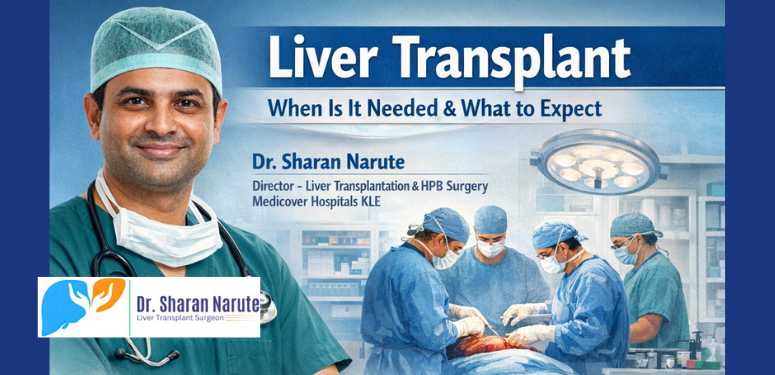
A liver transplant is a life-saving surgical procedure performed when the liver is severely damaged and can no longer function properly. The liver plays a vital role in digestion, detoxification, metabolism, and immune support. When it fails, timely medical intervention becomes critical.
Under the expert leadership of Dr. Sharan Narute, Director – Liver Transplantation and HPB Surgery at Medicover Hospitals KLE, patients receive advanced and compassionate care for complex liver conditions. With over 14 years of hands-on surgical experience, Dr. Narute specializes in gastrointestinal and hepato-pancreatico-biliary (HPB) surgeries, including liver transplantation.
What Is a Liver Transplant?
A liver transplant is a surgical procedure in which a diseased liver is replaced with a healthy liver from a donor. The donor liver may come from:
-
A deceased donor (brain-dead individual)
-
A living donor (a healthy person donating a portion of their liver)
The liver has a unique ability to regenerate, making living donor transplantation possible and highly effective.
When Is a Liver Transplant Needed?
A liver transplant is recommended when other medical or surgical treatments fail to restore liver function. It is usually considered in the following conditions:
1. Chronic Liver Disease (Cirrhosis)
Long-term liver damage caused by:
-
Hepatitis B or C
-
Alcohol-related liver disease
-
Fatty liver disease (NAFLD/NASH)
-
Autoimmune liver diseases
2. Acute Liver Failure
Sudden and severe liver dysfunction caused by:
-
Viral infections
-
Drug overdose (such as paracetamol toxicity)
-
Severe infections
-
Certain medications
3. Liver Cancer
Selected cases of early-stage liver cancer (hepatocellular carcinoma) may be treated effectively with liver transplantation.
4. Genetic & Metabolic Liver Disorders
Conditions such as Wilson’s disease or certain inherited metabolic diseases.
Symptoms That Indicate Advanced Liver Failure
Patients may experience:
-
Persistent jaundice (yellowing of skin and eyes)
-
Severe fatigue
-
Abdominal swelling (ascites)
-
Confusion (hepatic encephalopathy)
-
Recurrent vomiting of blood
-
Unexplained weight loss
-
Swelling in legs
If these symptoms appear, immediate consultation with a liver specialist is crucial.
Pre-Transplant Evaluation: What to Expect
Before being listed for a transplant, patients undergo a thorough evaluation, including:
-
Blood tests
-
Liver function tests
-
Imaging scans (CT/MRI)
-
Cardiac and lung assessments
-
Psychological evaluation
-
Donor compatibility testing (for living donors)
This comprehensive approach ensures the patient is medically fit for surgery and improves long-term outcomes.
The Liver Transplant Procedure
A liver transplant surgery typically lasts 8–12 hours. The damaged liver is removed and replaced with a healthy donor liver. The blood vessels and bile ducts are carefully connected to restore function.
Under experienced surgical leadership, such as that provided by Dr. Sharan Narute, advanced surgical techniques and strict safety protocols significantly improve survival rates and reduce complications.
Recovery After Liver Transplant
Immediate Post-Operative Phase
-
ICU monitoring for several days
-
Close observation of liver function
-
Pain management and infection control
Hospital Stay
Usually 2–3 weeks depending on recovery progress.
Long-Term Recovery
-
Lifelong immunosuppressant medications to prevent organ rejection
-
Regular follow-up visits
-
Lifestyle modifications (balanced diet, no alcohol, regular exercise)
Most patients gradually return to normal daily activities within 3–6 months.
Risks and Possible Complications
Like any major surgery, liver transplantation carries certain risks:
-
Organ rejection
-
Infection
-
Bleeding
-
Bile duct complications
-
Side effects of immunosuppressive medications
However, with expert care, early diagnosis of complications, and strict follow-up protocols, outcomes are highly favorable.
Success Rates and Quality of Life
Modern liver transplantation has excellent success rates, especially when performed in experienced centers. Many patients experience:
-
Improved energy levels
-
Normal digestion
-
Return to work and daily activities
-
Significantly improved quality of life
With advancements in surgical gastroenterology and HPB surgery, survival rates continue to improve.
Why Choose an Experienced Liver Transplant Surgeon?
Liver transplantation is a highly complex surgery requiring advanced expertise in gastrointestinal and HPB procedures.
After completing his MBBS, Dr. Sharan Narute pursued his graduation in surgery from the prestigious Kerala Institute of Medical Sciences. He further completed his super-specialty training in Surgical Gastroenterology from Sher-I-Kashmir Institute of Medical Sciences, a 1400-bedded tertiary care center serving a vast population, including the Indian Armed Forces.
With more than 14 years of hands-on surgical experience, he has developed deep expertise in gastrointestinal, hepato-pancreatico, and biliary surgeries. As a skilled liver transplant surgeon, he is committed to delivering advanced surgical care with a patient-first approach.