
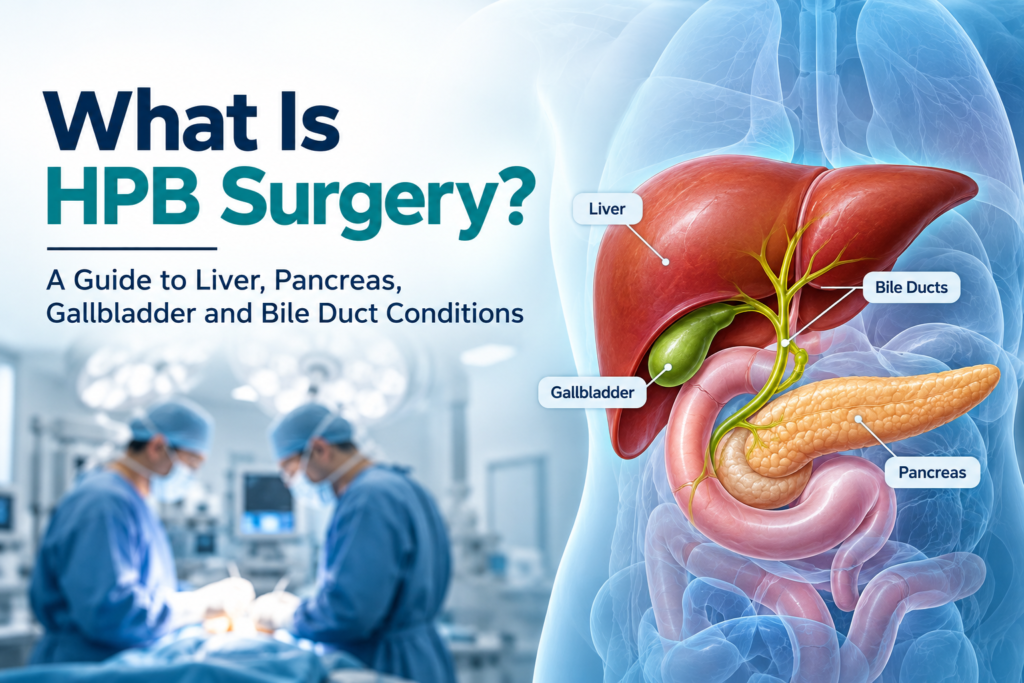
What Is HPB Surgery? A Guide to Liver, Pancreas, Gallbladder and Bile Duct Conditions
The liver, pancreas, gallbladder, and bile ducts play important roles in digestion, metabolism, and overall health. Diseases affecting these organs may require medical treatment, regular monitoring, or surgery, depending on the underlying condition.
Hepato-Pancreato-Biliary (HPB) surgery is a specialised field of surgery that focuses on selected conditions affecting the liver, pancreas, gallbladder, and bile ducts. These conditions include gallstones, certain liver and pancreatic tumours, bile duct problems, and other complex abdominal diseases.
Understanding HPB surgery can help patients learn about available treatment options and when they may need an evaluation by a specialist. Patients seeking information about liver and HPB care can also visit the official website of Dr. Sharan Narute.
What Does HPB Stand For?
HPB stands for Hepato-Pancreato-Biliary. It refers to three areas of the body:
-
Hepato: The liver.
-
Pancreato: The pancreas.
-
Biliary: The gallbladder and bile ducts.
These organs perform different but related functions. The liver produces bile, the gallbladder stores and releases bile, and the bile ducts carry bile to the small intestine to help digest fats. The pancreas produces digestive enzymes and hormones, including insulin, which helps regulate blood sugar.
An HPB surgeon specialises in surgical treatment for selected conditions affecting these organs. Depending on the diagnosis, a patient may need observation, medication, an endoscopic procedure, minimally invasive surgery, or open surgery.
The appropriate treatment depends on the patient’s medical condition, test results, and overall health.
Which Organs Are Treated by an HPB Surgeon?
An HPB surgeon manages selected surgical conditions affecting the liver, pancreas, gallbladder, and bile ducts. The treatment plan depends on the type of disease, its severity, and whether surgery is likely to provide a benefit.
Liver Conditions
The liver performs several essential functions, including processing nutrients, producing important proteins, and helping the body remove waste products.
Some liver conditions may require evaluation by a liver specialist or HPB surgeon.
-
Liver tumours: Certain liver tumours may require surgical removal. Treatment depends on the tumour type, size, location, liver function, and overall health of the patient.
-
Liver cysts: Many liver cysts are harmless and do not require treatment. Some may need further investigation or treatment if they cause symptoms or have concerning features.
-
Liver abscesses: A liver abscess is a collection of pus within the liver. Treatment may involve antibiotics and drainage, while surgery is needed only in selected cases.
-
Liver injuries: Serious liver injuries following accidents require urgent assessment. Treatment depends on the severity of the injury and the patient’s condition.
-
Advanced liver disease: Patients with severe liver disease may need specialist evaluation. Some may be considered for liver transplantation rather than conventional liver surgery.
The right treatment should be determined after a detailed medical assessment.
For more information about transplant-related treatment, read the liver transplant and surgery service information.
Pancreatic Conditions
The pancreas is located behind the stomach. It helps digest food and produces hormones that regulate blood sugar.
Certain pancreatic conditions may require evaluation by an HPB surgeon.
-
Pancreatic cysts: Some cysts can be monitored, while others require further investigation or treatment based on their characteristics and risk factors.
-
Pancreatitis: Pancreatitis is inflammation of the pancreas. Treatment depends on the cause and severity. Some complications may require specialist procedures or surgery.
-
Pancreatic tumours: Pancreatic tumours may be benign or cancerous. Treatment depends on the tumour type, location, stage, and the patient’s overall health.
-
Pancreatic duct problems: Blockages and other abnormalities of the pancreatic duct may require further investigation and, in selected cases, an endoscopic procedure or surgery.
Early medical evaluation can help identify the cause of symptoms and determine the most appropriate treatment.
Gallbladder and Bile Duct Conditions
The gallbladder stores bile produced by the liver. Bile ducts carry bile towards the small intestine.
Problems affecting these structures may cause pain, inflammation, or blockage of bile flow.
-
Gallstones: Gallstones are hardened deposits that form in the gallbladder. Stones that cause no symptoms may not require immediate treatment, while symptomatic gallstones may require surgery.
-
Bile duct stones: Stones can sometimes enter the bile ducts and block bile flow. Treatment may involve an endoscopic procedure, surgery, or a combination of approaches.
-
Bile duct strictures: A stricture is a narrowing of a bile duct. It may develop due to inflammation, injury, previous surgery, or other diseases.
-
Bile duct tumours: Some bile duct tumours require specialised investigations and treatment planning.
-
Gallbladder inflammation: Cholecystitis is inflammation of the gallbladder, often associated with gallstones. Treatment depends on the severity and the patient’s condition.
A specialist can determine whether observation, medication, an endoscopic procedure, or surgery is appropriate.
Common Symptoms That Need Medical Evaluation
Symptoms of HPB conditions vary depending on the affected organ and the underlying disease. Some symptoms may be mild, while others can indicate a serious medical problem.
Common symptoms include:
-
Persistent pain in the upper abdomen.
-
Pain on the upper right side of the abdomen, sometimes spreading to the back or shoulder.
-
Yellowing of the skin or eyes, known as jaundice.
-
Nausea or repeated vomiting.
-
Fever or chills with abdominal pain.
-
Dark urine or unusually pale stools.
-
Unexplained weight loss.
-
Loss of appetite.
-
Persistent abdominal swelling or discomfort.
These symptoms do not necessarily mean that surgery is required. A doctor will assess the symptoms, medical history, and investigation results before recommending treatment.
When should you seek urgent medical attention?
Severe abdominal pain accompanied by fever or jaundice, repeated vomiting, fainting, or confusion may indicate a serious condition. Seek urgent medical assessment rather than waiting for a routine appointment.
How Are HPB Conditions Diagnosed?
Accurate diagnosis helps doctors understand the condition and select an appropriate treatment plan. The investigations recommended depend on the patient’s symptoms and medical history.
1. Medical History and Physical Examination
The doctor may ask about the duration of symptoms, previous illnesses, medicines, family history, alcohol use, and previous abdominal surgery. A physical examination may help identify tenderness, swelling, or other concerning findings.
2. Blood Tests
Blood tests may include liver function tests, bilirubin, blood counts, kidney function tests, and pancreatic enzymes. These results can help doctors assess organ function and identify signs of inflammation or possible obstruction.
3. Ultrasound
Ultrasound is commonly used to examine the liver, gallbladder, and bile ducts. It may help identify gallstones, certain liver lesions, and enlargement of the bile ducts.
4. CT and MRI Scans
CT and MRI scans provide detailed images of abdominal organs. They may be recommended to evaluate tumours, cysts, inflammation, and the relationship between a lesion and nearby structures.
5. Specialised Bile Duct and Pancreatic Investigations
MRCP is a specialised MRI examination that can help doctors assess the bile ducts and pancreatic ducts.
ERCP is an endoscopic procedure that may be used to treat certain bile duct or pancreatic duct problems. It is not necessary for every patient and is recommended when appropriate.
6. Biopsy and Additional Tests
In selected cases, a tissue sample or another specialised investigation may be required to establish a diagnosis. A biopsy is not necessary for every liver or pancreatic condition.
After reviewing the findings, the medical team can explain the diagnosis and discuss suitable treatment options.
When Might HPB Surgery Be Recommended?
HPB surgery may be recommended when an operation is expected to provide a meaningful benefit and other treatments are insufficient or unsuitable.
However, not every liver, pancreatic, gallbladder, or bile duct condition requires surgery. Some conditions can be managed with medication, monitoring, endoscopic procedures, or other treatments.
Surgery may be considered for:
-
Symptomatic gallstones or recurrent gallbladder inflammation.
-
Selected bile duct obstructions or injuries.
-
Certain liver tumours or cysts.
-
Selected pancreatic tumours or complicated pancreatic conditions.
-
Some bile duct tumours.
-
Specific complications that cannot be adequately managed with other treatments.
The type of operation depends on the diagnosis, the location of the disease, and the patient’s overall health.
Open and Minimally Invasive Surgery
Some HPB procedures can be performed using minimally invasive techniques, such as laparoscopy or robotic-assisted surgery, when appropriate and available. These techniques use smaller incisions than traditional open surgery.
Open surgery may still be necessary for complex conditions or when the surgeon considers it the most appropriate approach.
Minimally invasive surgery is not suitable for every patient. The decision depends on the medical findings, surgical expertise, available facilities, and the potential benefits and risks.
Why Specialist Assessment Matters
HPB surgery can involve complex anatomy and important blood vessels. Careful assessment and planning are therefore essential.
Depending on the condition, the treating team may include an HPB surgeon, gastroenterologist, radiologist, anaesthesiologist, oncologist, or other specialists.
A multidisciplinary approach helps patients understand their options and receive care appropriate to their individual needs.
What Should Patients Know Before Surgery?
Preparing for surgery involves understanding the diagnosis, the proposed procedure, possible complications, and the expected recovery process.
Before making a decision, discuss the following points with your treating doctor.
Understand the purpose of surgery: Ask why the procedure has been recommended, what it aims to achieve, and whether other treatment options are available.
Review your medical reports: Carry previous blood tests, imaging reports, prescriptions, discharge summaries, and other relevant medical documents.
Discuss your existing health conditions: Inform the medical team about diabetes, heart disease, kidney problems, allergies, previous operations, and all medicines or supplements you take.
Follow pre-operative instructions: Your doctor may provide instructions about fasting, medicines, and additional investigations. Follow these instructions carefully.
Understand the risks and benefits: Every operation has potential risks. Ask about complications relevant to your condition and how they may be managed.
Plan for recovery: Recovery depends on the procedure and your general health. Ask about the expected hospital stay, pain management, wound care, diet, physical activity, and follow-up appointments.
Know when to seek help after surgery: Ask your medical team which symptoms require urgent review, including fever, worsening abdominal pain, persistent vomiting, wound problems, or jaundice.
Clear communication with your treating team can help you prepare for surgery and understand the recovery process.
How to Choose an HPB Surgeon in Pune
If you are looking for an HPB surgeon in Pune, consider the surgeon’s relevant qualifications, specialised training, experience with your condition, and the facilities available at the hospital.
A suitable surgeon should explain the diagnosis, proposed treatment, available alternatives, and potential risks in language you can understand.
Consider the following factors when choosing a specialist:
-
Relevant qualifications: Check the surgeon’s medical qualifications, specialist training, and professional registration.
-
Experience with your condition: Ask about experience treating the particular liver, pancreatic, gallbladder, or bile duct problem you have.
-
Hospital facilities: Complex procedures may require specialised operating facilities, intensive care, diagnostic services, and access to other medical specialists.
-
Multidisciplinary support: Ask whether other specialists are involved when the condition requires coordinated treatment.
-
Clear communication: Your surgeon should explain the expected benefits, risks, alternatives, and recovery process.
-
Follow-up care: Confirm how post-operative reviews and ongoing treatment will be arranged.
Patients should avoid choosing a surgeon solely on the basis of online rankings or unverified success-rate claims.
You can review Dr. Sharan Narute’s professional profile and qualifications to learn about his training and surgical background. For appointment-related details, visit the official contact page.
A consultation can help determine whether an HPB surgical opinion is appropriate for your condition.
Frequently Asked Questions
What is HPB surgery?
HPB surgery stands for Hepato-Pancreato-Biliary surgery. It focuses on surgical treatment for selected conditions affecting the liver, pancreas, gallbladder, and bile ducts.
Which diseases are treated by an HPB surgeon?
An HPB surgeon may treat selected liver tumours, pancreatic diseases, gallstones, bile duct obstructions, and other conditions affecting these organs. The appropriate treatment depends on the diagnosis and severity of the disease.
Does every patient with gallstones need surgery?
No. Gallstones that do not cause symptoms may not require immediate treatment. Patients with symptomatic gallstones or certain complications may be advised to undergo surgery after medical evaluation.
Is HPB surgery always performed as open surgery?
No. Some procedures can be performed using laparoscopic or robotic-assisted techniques when appropriate. Other conditions may require open surgery. The choice depends on the disease, the patient’s health, and the surgeon’s assessment.
How long does recovery after HPB surgery take?
Recovery varies according to the procedure, the severity of the condition, and the patient’s overall health. Less complex procedures may have shorter recovery periods, while major liver or pancreatic operations may require a longer hospital stay and recovery period.
Your surgeon can provide guidance based on the planned operation.
When should I consult an HPB surgeon in Pune?
You may need an HPB surgical consultation if your doctor identifies a liver tumour, pancreatic lesion, symptomatic gallstones, bile duct obstruction, or another condition that may require surgery. A consultation does not necessarily mean that an operation will be required.
Conclusion
HPB surgery is a specialised field that focuses on conditions affecting the liver, pancreas, gallbladder, and bile ducts. These organs perform important functions, and diseases affecting them may require different approaches to diagnosis and treatment.
Some conditions can be managed with medication, monitoring, or endoscopic procedures, while others may require surgery. The right approach depends on the patient’s diagnosis, overall health, and medical assessment.
If you experience persistent abdominal pain, jaundice, unexplained weight loss, or other concerning symptoms, consult a qualified medical professional for evaluation.
When surgery is being considered, choosing a suitably qualified specialist, understanding the available treatment options, and following medical advice can help you make informed decisions about your care.