
Portal Hypertension: Causes, Symptoms, Complications and Treatment Options
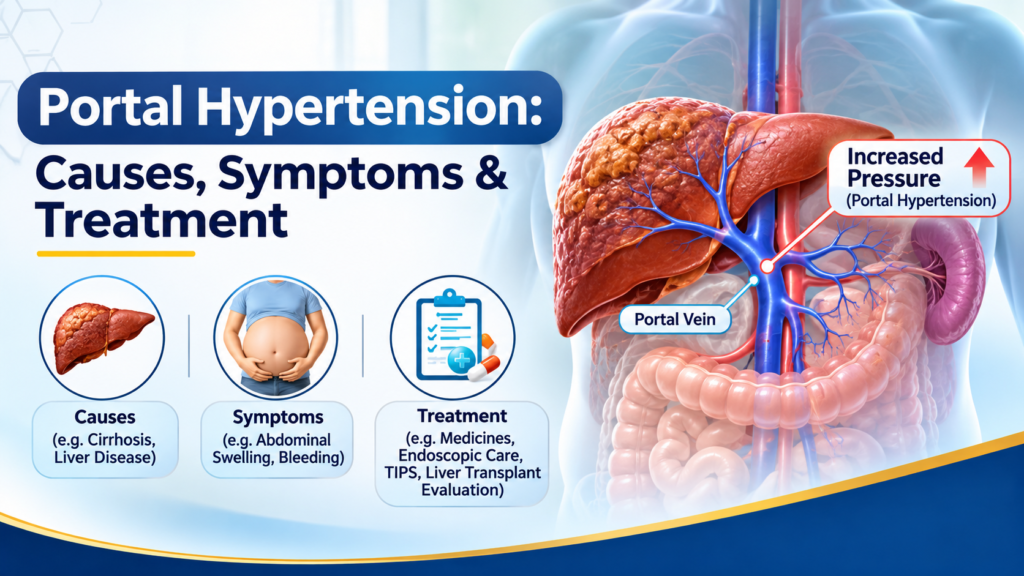
Portal hypertension is a condition in which the pressure inside the portal venous system becomes abnormally high. The portal vein carries blood from the digestive organs and spleen to the liver. When blood flow through the liver becomes restricted, pressure can build up in this vein and its branches.
It is commonly associated with advanced chronic liver disease and cirrhosis. Portal hypertension may develop gradually, and some people do not notice symptoms in the early stages. However, as the condition progresses, it can lead to complications that require medical attention.
Understanding the causes, warning signs and available treatment options can help patients seek timely evaluation and appropriate care.
What Is Portal Hypertension?
The portal vein transports blood from the stomach, intestines, pancreas and spleen to the liver. The liver processes nutrients and other substances carried in this blood before it enters the general circulation.
When blood encounters resistance while passing through the liver, pressure in the portal vein increases. This condition is known as portal hypertension.
In many patients, the increased resistance develops because of scarring and structural changes in the liver caused by cirrhosis. In some cases, portal hypertension can also occur due to problems affecting the portal vein or other blood vessels.
What Causes Portal Hypertension?
The causes of portal hypertension can be grouped according to where blood flow is affected.
1. Cirrhosis and Chronic Liver Disease
Cirrhosis is one of the most common causes of portal hypertension. Long-term liver damage leads to scar tissue formation and changes in the liver’s normal structure. These changes make it harder for blood to flow through the organ, increasing pressure in the portal vein.
Conditions that may lead to cirrhosis include:
- Long-standing fatty liver disease associated with metabolic problems
- Chronic hepatitis B or hepatitis C infection
- Alcohol-related liver disease
- Autoimmune liver diseases
- Certain inherited or metabolic liver conditions
2. Portal Vein Blockage
A blood clot in the portal vein, known as portal vein thrombosis, can restrict blood flow into the liver. This may cause portal hypertension even in some people who do not have cirrhosis.
3. Other Blood Vessel and Heart Conditions
Certain conditions affecting blood flow around the liver can also increase portal pressure. These include Budd–Chiari syndrome, which involves obstruction of the veins that drain blood from the liver, and some forms of severe right-sided heart disease.
The underlying cause is important because treatment depends on where the blockage or increased resistance occurs.
Symptoms of Portal Hypertension
Portal hypertension may not cause noticeable symptoms in its early stages. Some people discover the condition during an investigation for another liver problem.
As pressure increases and complications develop, symptoms may include:
- Abdominal swelling: Fluid may collect inside the abdomen, a condition called ascites.
- Swelling in the legs: Fluid retention can cause swelling around the ankles and lower legs.
- Enlarged spleen: Increased pressure can cause the spleen to become enlarged.
- Easy bruising or bleeding: Changes in liver function and platelet levels may affect normal blood clotting.
- Vomiting blood: This can occur when enlarged veins in the food pipe or stomach bleed.
- Black stools: Dark, tar-like stools may indicate bleeding in the digestive tract.
- Confusion or unusual sleepiness: These may be signs of hepatic encephalopathy, a complication associated with advanced liver disease.
Not everyone with portal hypertension experiences all these symptoms. Their presence and severity depend on the underlying cause and the stage of the condition.
Complications of Portal Hypertension
If portal hypertension is not identified and managed appropriately, it can lead to several complications. Some may become serious or life-threatening.
1. Oesophageal and Gastric Varices
When blood cannot flow easily through the liver, it may be redirected through smaller veins in the food pipe and stomach. These veins can become enlarged and swollen, forming varices.
Varices may rupture and cause internal bleeding. Vomiting blood or passing black, tar-like stools requires immediate emergency medical attention.
2. Ascites
Ascites refers to the accumulation of fluid inside the abdominal cavity. It can cause abdominal enlargement, discomfort, reduced appetite and difficulty breathing when severe.
People with ascites may also develop an infection of the abdominal fluid called spontaneous bacterial peritonitis. Fever, abdominal pain or new confusion in someone with ascites needs prompt medical assessment.
3. Splenomegaly
Increased pressure in the portal venous system can cause the spleen to enlarge. This is known as splenomegaly. An enlarged spleen may trap more blood cells, sometimes resulting in reduced platelet counts.
4. Hepatic Encephalopathy
When the liver cannot adequately process certain substances produced in the body, they may affect brain function. This can lead to changes in sleep patterns, difficulty concentrating, confusion and, in severe cases, reduced consciousness.
5. Kidney Complications
Advanced liver disease and portal hypertension can affect kidney function. In some patients, a serious complication called hepatorenal syndrome may develop. Reduced urine output, increasing swelling or a sudden deterioration in general health requires medical review.
These complications are also discussed in our detailed guide to complications of chronic liver disease.
How Is Portal Hypertension Diagnosed?
Diagnosing portal hypertension involves understanding the patient’s medical history, examining possible signs of chronic liver disease and assessing blood flow through the liver and portal vein.
A specialist may recommend one or more of the following investigations depending on the patient’s condition.
1. Blood Tests
Blood tests help assess liver function, blood cell counts and other signs of underlying disease. These may include:
- Liver enzymes such as ALT and AST
- Bilirubin levels
- Albumin levels
- Platelet count
- Prothrombin time and INR
- Kidney function tests
Blood tests alone cannot confirm portal hypertension, but they provide important information about liver health and possible complications.
2. Abdominal Ultrasound with Doppler
An ultrasound examination can help assess the liver, spleen, abdominal fluid and portal vein. Doppler ultrasound also evaluates the direction and pattern of blood flow through the portal venous system.
It may help identify portal vein thrombosis, enlarged blood vessels and other abnormalities.
3. Upper Gastrointestinal Endoscopy
An upper GI endoscopy allows the doctor to examine the food pipe and stomach for enlarged veins known as varices.
It is particularly useful when screening or evaluating patients who may be at risk of bleeding. If required, certain treatments can also be performed during endoscopy.
4. Liver Elastography
Liver elastography, including FibroScan, measures liver stiffness. It can help assess liver fibrosis and contribute to estimating the risk of clinically significant portal hypertension in selected patients.
It does not directly replace every other investigation, and its findings need to be interpreted alongside clinical information.
5. Hepatic Venous Pressure Gradient (HVPG)
In selected cases, a specialist may recommend measuring the hepatic venous pressure gradient. This is an invasive procedure that helps assess pressure within the liver’s venous circulation.
In patients with cirrhosis, an HVPG of 10 mmHg or more is generally used to define clinically significant portal hypertension. However, this measurement is not required for every patient.
The choice of investigations depends on the suspected cause, symptoms and clinical findings.
Renewing consensus in portal hypertension+1
Portal Hypertension Treatment: What Are the Available Options?
The treatment of portal hypertension depends on its underlying cause, severity and associated complications. The main goals are to manage the cause, reduce the risk of complications and protect the patient’s overall health.
There is no single treatment suitable for everyone.
1. Treating the Underlying Liver Condition
When portal hypertension is associated with chronic liver disease, managing the underlying condition is an important part of treatment.
Depending on the diagnosis, this may involve:
- Antiviral treatment for certain viral hepatitis infections
- Management of metabolic conditions associated with fatty liver disease
- Treatment of autoimmune liver conditions
- Avoiding alcohol in alcohol-related liver disease
- Regular monitoring of liver function and disease progression
Treatment should be planned according to the patient’s diagnosis and medical history.
2. Medications to Reduce Portal Pressure
Certain medicines, known as non-selective beta-blockers, may be prescribed to reduce portal pressure and lower the risk of variceal bleeding in appropriate patients.
Examples include carvedilol, propranolol and nadolol. The choice of medicine and its dose depend on factors such as blood pressure, kidney function and the patient’s overall condition.
These medicines should only be taken under medical supervision. They are not suitable for every patient.
3. Endoscopic Variceal Ligation
If enlarged veins in the food pipe are at risk of bleeding, an endoscopic procedure called variceal band ligation may be recommended.
During this procedure, the doctor uses a specialised endoscope to place small rubber bands around selected enlarged veins. This helps close them and reduce the risk of bleeding.
Some patients may need repeated endoscopic sessions and continued follow-up.
4. Managing Ascites
Treatment for ascites depends on the amount of fluid, the patient’s kidney function and the severity of liver disease.
Management may include:
- Dietary sodium restriction under medical guidance
- Diuretic medicines when appropriate
- Monitoring body weight, kidney function and electrolyte levels
- Paracentesis, a procedure used to remove excess abdominal fluid
Patients should not start diuretics or make major dietary changes without consulting their treating doctor.
5. Transjugular Intrahepatic Portosystemic Shunt (TIPS)
TIPS is a specialised procedure used in selected patients with complications of portal hypertension.
A small channel is created inside the liver to connect the portal venous system with a vein that carries blood away from the liver. A stent is placed to keep this channel open, allowing some blood to bypass the high-resistance area.
TIPS may be considered in situations such as recurrent variceal bleeding despite appropriate treatment or selected cases of recurrent or difficult-to-control ascites.
It is not suitable for everyone. The patient’s liver function, heart health, kidney function and risk of hepatic encephalopathy need careful assessment before the procedure.
Renewing consensus in portal hypertension+1
6. Liver Transplant Evaluation
In patients with advanced cirrhosis, worsening liver function or serious complications, liver transplantation may need to be considered.
A transplant evaluation helps determine whether the patient is suitable for the procedure. It involves assessing liver disease severity, general health, other medical conditions and the potential benefits and risks.
Not everyone with portal hypertension requires a liver transplant. The decision is made after a detailed specialist assessment.
When Should You Consult a Liver Specialist?
It is important to seek medical advice if you have been diagnosed with chronic liver disease or cirrhosis, particularly if you develop new or worsening symptoms.
Consider consulting a liver specialist if you experience:
- Persistent abdominal swelling
- Swelling in the legs or ankles
- Unexplained changes in platelet counts
- Repeated episodes of jaundice
- Unusual bruising or bleeding
- Abnormal liver test results
- A diagnosis of portal vein thrombosis
- Enlarged veins detected during an endoscopy
Seek emergency medical care
Vomiting blood, passing black stools, sudden confusion, severe abdominal pain, fever with ascites or reduced consciousness requires urgent medical attention. Do not wait for a routine appointment if these symptoms occur.
Can Portal Hypertension Be Prevented?
Portal hypertension cannot always be prevented, particularly when it develops due to certain vascular conditions or established liver damage. However, reducing the risk of liver disease and managing existing conditions can help protect liver health.
Some useful steps include:
- Avoid alcohol, especially if you have been diagnosed with liver disease.
- Maintain a healthy body weight through appropriate diet and physical activity.
- Get tested for hepatitis when recommended.
- Follow medical advice for diabetes and other metabolic conditions.
- Avoid taking unnecessary medicines or herbal supplements without medical guidance.
- Attend regular follow-up appointments if you have chronic liver disease.
These steps support liver health but cannot guarantee that portal hypertension will not develop.
Frequently Asked Questions
1. Is portal hypertension the same as high blood pressure?
No. Portal hypertension refers specifically to increased pressure in the portal venous system, which carries blood from the digestive organs to the liver. It is different from systemic high blood pressure, which is measured using a blood pressure cuff.
2. Can portal hypertension occur without cirrhosis?
Yes. Although cirrhosis is a common cause, portal hypertension can also develop due to portal vein thrombosis, certain vascular disorders and conditions affecting blood drainage from the liver.
3. Is portal hypertension a serious condition?
It can be serious, particularly when complications such as variceal bleeding, ascites or hepatic encephalopathy develop. Early diagnosis and appropriate medical management can help reduce the risk of complications.
4. Can portal hypertension be treated with medicines?
Certain medicines can help lower portal pressure and reduce the risk of complications such as variceal bleeding. However, medication alone may not be sufficient for every patient. Treatment depends on the underlying cause and the severity of the condition.
5. Does every patient with portal hypertension need a liver transplant?
No. Many patients can be managed with medications, endoscopic procedures and other treatments. Liver transplant evaluation may be considered in selected patients with advanced liver disease or serious complications.
6. Which tests help diagnose portal hypertension?
Doctors may recommend blood tests, abdominal ultrasound with Doppler, upper GI endoscopy, liver elastography and, in selected cases, hepatic venous pressure gradient measurement. The investigations depend on the patient’s condition.
Consult Dr. Sharan Narute for Liver Disease Evaluation
Portal hypertension requires careful evaluation because it may be associated with advanced liver disease and complications affecting other organs. Identifying its underlying cause and understanding the stage of liver damage are important steps in planning appropriate treatment.
Dr. Sharan Narute provides evaluation and surgical care for liver and hepatobiliary conditions. Patients with chronic liver disease, suspected portal hypertension or related complications can seek a specialist consultation to understand their condition and available treatment options.
For more information, read our guide on Complications of Chronic Liver Disease.
To discuss your condition and arrange an appointment, visit the Contact Us page.